You already source the recordings.List them here instead of trading around the marketplace.
If you buy, commission or resell robot recordings, you are already doing half of this marketplace’s work - only without its buyers. Put what you have up as a dataset, or fill an open Collection with it. Nothing gets merged: your files stay separate and stay yours, a Collection only links them, and you decide per dataset whether it also goes on sale on its own.
- 10 %
- of a dataset sale stays with the platform
- 10 %
- when a Collection buys recording time instead
- 49
- robot families the marketplace filter tells apart
- LeRobot
- the one format everything ends up in
You already have the buyers. What you lack is supply you can vouch for.
Reselling finished datasets works until a buyer asks where they came from. Then it gets quiet.
Most robot data on the market has changed hands more than once. Somewhere along that chain the authorship claim thins out, and nobody can say any more who held the arm. That is fine until a customer asks, and it is a problem the moment they do.
Here every dataset carries an account, a server timestamp and a declaration of authorship. Not because we are stricter than the market, but because the recording and the upload happen in the same system. There is no chain to reconstruct.
The second thing you get is supply you can order. If a customer needs an arm nobody has recorded yet, you post a Collection instead of searching for something that does not exist. You set the arm, the task, the scope and the budget, and people with the matching hardware record it.
- Every dataset has one traceable origin
- Missing supply can be commissioned, not just searched for
- You keep your own pricing and your own customers
- No exclusivity towards us, and no partner tier
Many datasets, one Collection. Nothing is merged.
A Collection does not swallow your recordings. It links them, and the link is what the buyer downloads.
The old picture of pooling data is a funnel: everything goes in at the top, one big file comes out at the bottom, and whatever was yours is no longer identifiable in it. That is not what happens here. Every dataset keeps its own identity, its own episodes and its own owner. A Collection is a bracket around them, not a blender.
That matters for you twice over. It is why several suppliers can fill the same Collection without any of them handing over their catalogue to the others, and it is why a delivery is reviewed one contribution at a time instead of all or nothing.
The archive is built at download time from whatever is linked at that moment. A Collection that keeps growing keeps working: what you add later shows up in the next download instead of forcing a second deal.
Your dataset keeps its name
It stays under your account with its own episodes and its own preview, whether it sits in one Collection, in three, or in none at all.
Reviewed per contribution
The buyer accepts or rejects what you delivered, not what everybody delivered. One rejected contribution does not hold up the rest of the Collection.
The archive is built on request
It is assembled from what is linked at that moment, so a Collection can keep filling up after the first buyer has already downloaded it.
Three ways people use this side of the platform
Pick the one that matches how you work today.
You hold datasets and want a second sales channel
List them in the marketplace, keep your own price, and pay a share only on what actually sells. Nothing here asks you to stop selling elsewhere. What you do give up is the ability to sell a dataset that is bound to an exclusive Collection - that flag is set before the recording starts, and it is visible on the tile.
Three views of the same Collection
Your customer, the collector and you do not see the same thing. Switch between them and watch which rows close.
- Robot arm
- SO-100
- Camera roles
- Wrist and front
- Task description
- Move the sponge from the shelf into the bowl, changing shelf positions
- Attachments
- Two attachments
- Progress
- As shown on the bar above
- Rate per hour
- Not set yet
- Total budget
- Not set yet
- Exclusivity
- Yes
- Who commissioned it
The client is never named, not even as an empty field in the response.
- The individual contributions
- Only your own
Every collector sees his own contribution. Not the others.
- Origin per contribution
- Only your own
Origin is visible to whoever it belongs to.
The collector sees everything he needs in order to record, and nothing beyond that. He sees the arm, the camera roles, the task, the attachments and what the work pays. He also sees whether the Collection is exclusive, and he sees it before he starts. He does not see who commissioned it, and he does not see the other collectors’ contributions.
Open in this view: 8 of 11 rows.
What is locked does not disappear. It stays there as a locked row, otherwise you would not see the difference.
Four steps from a folder on your disk to a listing
None of them needs Python, and none of them needs a call with us first.
Bring the recordings into LeRobot format
Whatever you sourced - your own arm, a partner’s, a purchase - ends up in the same format. The desktop client converts and checks while you record, and a dataset that is already in LeRobot format goes up as it is.
Describe it once
Task, robot arm, cameras, episode count. The marketplace groups arms into families, so the same listing is found under SO-100 and under a raw robot type like so100_follower.
Set a price, or join a Collection
Either it goes on sale on its own, or it fills an open Collection and is paid by the hour of recorded material. Both at the same time stays possible until a Collection is marked exclusive.
Get paid after acceptance
A sale settles at checkout. A contribution to a Collection is released once the buyer has accepted it, or once the review window for that contribution has run out - so nothing is paid out unreviewed, and nothing sits in review forever.
Sitting on recordings that nobody has ever been able to buy?
Put one upA flag that closes off resale
Flip it. It takes effect in three places, and two of them are not yours.
The tile in the marketplace
Without the flag, a collector may also offer his dataset in the marketplace after you have accepted it. That is written on the tile before he starts.
The collector’s dataset list
Next to his dataset there is a button that puts it up for sale. He can use it whenever he wants.
Your side
The lock comes with acceptance and payment. Whoever was not accepted and not paid is not left sitting on his data.
The flag cannot be flipped after the first delivery, in either direction. Otherwise the terms would change after the work is done.
Two ways in, two rates
Both are named before you start, and both are the whole fee.
10 percent of the price you set
You set the price, the platform keeps 10 percent of it, you keep the rest. The rounding is carried on the fee, so price equals fee plus payout in every single case - there is no second line that appears later.
10 percent when the buyer is paying for time
A Collection pays by the hour of recorded material. What is bought there is work and not a finished file, and work carries the higher share. The rate is written into the Collection when it is created and frozen there, so a later change to our rates never reaches a Collection that is already running.
Which of the two applies is decided by what you are selling, not by who you are. The same dataset can be sold on its own today and fill a Collection tomorrow.
What a Collection costs, in your numbers
Nothing is filled in for you. Two numbers you already know, and the card further up takes them over.
Roughly: 400 episodes at 45 seconds each are five hours.
Whatever you and the people recording agree on. We do not set it.
- Budget
- Platform share (10 percent)
- Goes to whoever records
Enter both numbers and the perspective card further up fills in its two money rows.
The old way of sourcing, and this one
Not a verdict on the trade. A comparison of two procedures.
| What you are comparing | Sourcing through contacts | Sourcing here |
|---|---|---|
| Where the data came from | Whatever the seller tells you | Account, timestamp, authorship declaration |
| What is missing | You keep searching, or you drop the request | You post it and people record it |
| Specification | Agreed in email, checked afterwards | Arm and camera roles are part of the request |
| Paying | Up front, or on invoice after delivery | From credit, released only once you accept |
| If it does not fit | A conversation | Rejected with a reason, money back in the budget |
| Your customer | Known to everyone in the chain | Not known to us - there is no field for it |
Whoever sources through contacts today can post a Collection here without changing anything else about how they work.
The facts you will be asked for
Everything here comes from the platform, not from a brochure.
- Format
- LeRobot v2.1
- Parquet per episode, video per camera, metadata alongside. Trains without conversion.
- Origin
- Per dataset
- An account, a server timestamp and a declaration of authorship. Recording and upload happen in the same system, so there is no chain to reconstruct.
- Requester
- Anonymous
- We never publish who commissioned a Collection - no name, no account, no country. That holds for search engines too.
- Payout
- After acceptance
- Money leaves the budget when a contribution comes in, and reaches the collector once it is accepted. A rejection puts it back.
- Exclusivity
- Optional, and final
- If the flag is set, the collector may not sell that dataset in the marketplace afterwards, and the platform does not allow it either. It is visible before the recording starts and cannot be changed later, in either direction.
- Your own price
- Yours
- We do not set it, do not cap it and do not compare it. What you charge your customer is your business.
Rather see what buyers are asking for before you record anything?
Open CollectionsQuestions people ask before they list anything
No. There is no exclusivity towards us and no partner tier. The single exception is a dataset bound to an exclusive Collection, and that flag is visible before the recording starts.
Related on AY-Robots
Teleoperation
Remote operators drive your arm and record demonstration data around the clock.
Read moreDesktop client
Record your own datasets with your arm and cameras, straight into LeRobot format.
Read moreCloud training
Fine-tune GR00T, Pi0.5, SmolVLA or ACT on a rented GPU, billed by the minute.
Read moreSimulator
Real teleop demos become varied simulation episodes, checked automatically and exported in LeRobot format.
Read moreThree pages next to this one
Same market, seen from the other three chairs. Each one explains a part of where the demand you are selling into comes from.
Commissioning instead of reselling
What a buyer fills in when nothing on the shelf fits: arm, task, scope, budget, rights. The form itself needs no account any more - only publishing does.
Read moreWhere the scarce recordings come from
The rarer the arm, the thinner the supply and the higher the rate. Which arms those are, and what an hour on them is worth.
Read moreUniversity labs as suppliers
Idle lab hours turned into recordings, plus the rights questions a supervisor asks before any of it is allowed to leave the building.
Read moreThree things you can do here today
Looking around costs nothing and needs no account. Putting something up, or commissioning it, runs through your dashboard: the sign-in comes first, the form right after it.
Sell your dataset
You already have the recordings. The form asks for task, robot arm, cameras and a price, and hands the listing back to you as a draft. Nothing is public until you publish it, and the price stays changeable afterwards.
Sits in your dashboard, so you sign in on the way.
List a data request
A customer order and nothing on the shelf: describe what has to be recorded, fund the pot, and let collectors fill it. The public directory shows every open request the way a collector sees it, and the request itself never names you.
The directory is public. Creating a Collection sits in your dashboard, behind the same sign-in.
Buy datasets
Filter by robot family, task and environment and see what is already on offer. It is the same filter your own listing will be found through, which makes it the quickest way to learn how to describe one.
Open to everyone. Looking needs no account.
This is the tile your dataset gets
Robot arm and task are two of the filters a buyer browses with, so they stand at the top of the tile. Underneath it are the format everything ends up in and the camera roles the recordings were made with.
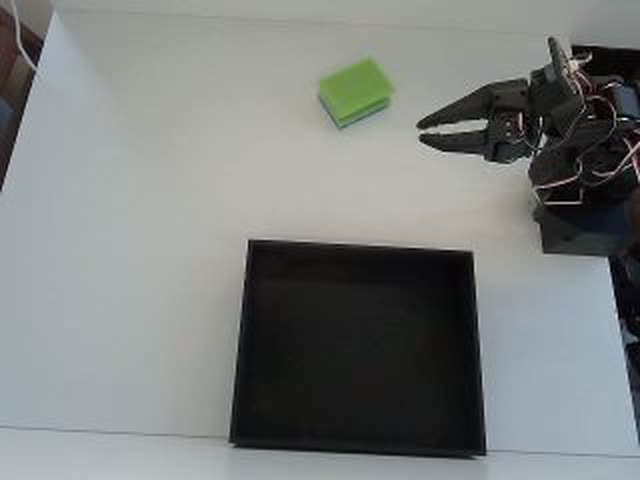
Sponge from the shelf into the bowl
LeRobot
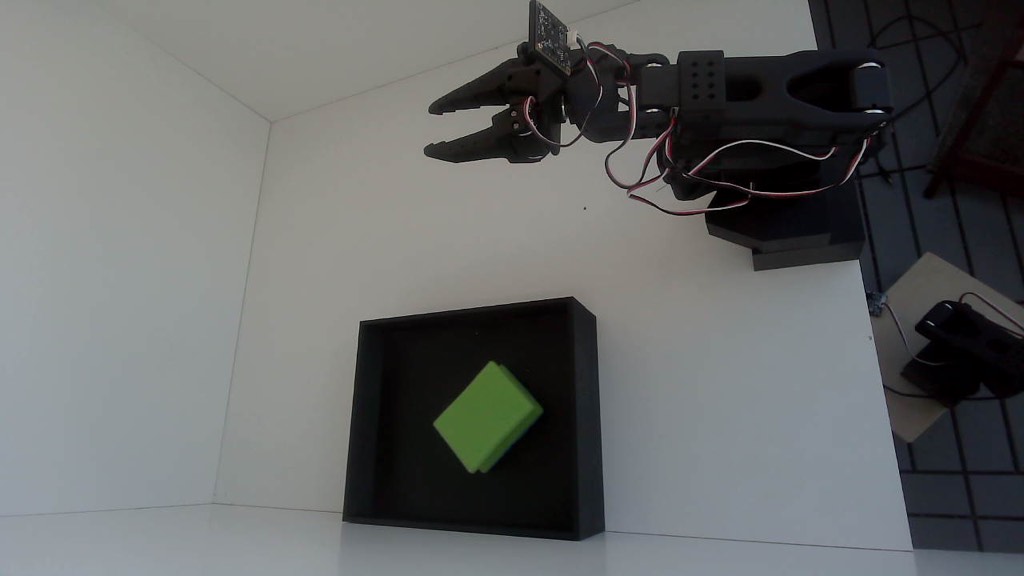
Part out of the bin into the fixture
LeRobot

Cable into the clamp, changing positions
LeRobot
Example tiles, not live listings. Task, arm and camera roles are the same example that runs through the rest of this page. The preview images are our own recordings and are blurred on purpose, because none of them shows exactly the task named on the tile. A real tile also carries a price, and that one is set by whoever lists the dataset.
Your data is worth more with buyers attached.
One account carries both sides of this page: what you put up for sale, and what you commission from collectors.